You are viewing an old revision of this post, from July 15, 2018 @ 15:00:06. See below for differences between this version and the current revision.
Following the Norman Conquest, William parcelled out land to nobles in return for their political, financial and military support. Odo is listed as Lord of Cudworth in the Domesday Book, and also in the Exon Domesday. He held Cudworth “in capite” – in other words, holding the land as a Lord in his own right, being granted directly from the King.
The location name is made of two parts Cuda (a Saxon first name) and Worth (enclosure). Thus Cudworth meant Cuda’s enclosure.
The site has three important parts, all listed as nationally important archaeological sites.
- Cudworth Moat was important as it is known as listed as a Fortified Manor House.
- As far as fortifications go it was on the lower levels of administration, but was the official residence of the local lord, where he held court, and held trials
- It is listed as a scheduled monuments or nationally important archaeological sites.
- The medieval village of Cudworth, can be seen to the right (see the lines running north south and east west to the right of the plowed field. The village is likewise listed as a scheduled monument.
- Sant Micheal Church to the north of the manor house mound, is also listed as archeologically important . Alan de Furneaux gifted the church to Wells Cathedral in 1186.
The moated site at Knight House Farm [Cudworth] is one of relatively few recorded examples in south west England. It also possesses contemporary document records giving details of the site’s occupation and use. Historic England
In the aerial picture below, you can see the moat and where the manor house would have stood at the top left (square and rounded square). The church is just north of them. The village is to the right. Knight House Farm is bottom left, situated on Knight’s Lane.
As the site has not been excavated, so it is not known what lies under the mound of where the manor sat. However typically:
“In England in the 11th century the manor house was an informal group of related timber or stone buildings consisting of the hall, chapel, kitchen, and farm buildings contained within a defensive wall and ditch.” Encyclopaedia Britannica
Post Revisions:
- February 19, 2024 @ 07:01:14 [Current Revision] by Dr Craig Furneaux
- February 19, 2024 @ 07:01:13 by Dr Craig Furneaux
- February 19, 2024 @ 06:56:45 by Dr Craig Furneaux
- January 27, 2024 @ 12:12:13 by Dr Craig Furneaux
- January 27, 2024 @ 12:12:13 by Dr Craig Furneaux
- January 27, 2024 @ 12:12:13 by Dr Craig Furneaux
- January 27, 2024 @ 12:09:53 by Dr Craig Furneaux
- January 27, 2024 @ 12:09:52 by Dr Craig Furneaux
- January 27, 2024 @ 12:09:52 by Dr Craig Furneaux
- January 27, 2024 @ 12:08:00 by Dr Craig Furneaux
- January 27, 2024 @ 12:08:00 by Dr Craig Furneaux
- January 27, 2024 @ 12:08:00 by Dr Craig Furneaux
- January 27, 2024 @ 11:58:40 by Dr Craig Furneaux
- July 15, 2018 @ 15:31:17 by Dr Craig Furneaux
- July 15, 2018 @ 15:01:08 by Dr Craig Furneaux
- July 15, 2018 @ 15:00:06 by Dr Craig Furneaux
- July 15, 2018 @ 14:58:35 by Dr Craig Furneaux
- July 15, 2018 @ 14:55:47 by Dr Craig Furneaux
- July 15, 2018 @ 14:53:44 by Dr Craig Furneaux
- July 15, 2018 @ 14:47:48 by Dr Craig Furneaux
- July 15, 2018 @ 03:11:53 by Dr Craig Furneaux
- April 11, 2018 @ 08:11:34 by Dr Craig Furneaux
- April 8, 2018 @ 10:21:21 by Dr Craig Furneaux
- April 2, 2018 @ 15:53:43 by Dr Craig Furneaux
- April 2, 2018 @ 13:19:40 by Dr Craig Furneaux
- April 2, 2018 @ 09:52:19 by Dr Craig Furneaux
- March 31, 2018 @ 08:03:44 by Dr Craig Furneaux
- March 31, 2018 @ 00:10:17 by Dr Craig Furneaux
- March 30, 2018 @ 22:15:59 by Dr Craig Furneaux
- March 30, 2018 @ 22:09:28 by Dr Craig Furneaux
- March 30, 2018 @ 22:09:12 by Dr Craig Furneaux
- March 30, 2018 @ 22:00:06 by Dr Craig Furneaux
- March 30, 2018 @ 21:49:17 by Dr Craig Furneaux
- March 30, 2018 @ 21:46:40 by Dr Craig Furneaux
Changes:
| July 15, 2018 @ 15:00:06 | Current Revision | ||
|---|---|---|---|
| Content | |||
| Deleted: Following the Norman Conquest, William parcelled out land to nobles in return for their <a href="http:// http://www.castlesandmanorhouses.com/ demesnes.htm">political, financial and military support</a>. <a href="https:/ /furneaux.family/2018/03/ 26/odo-otto-eudes- de-fourneaux/">Odo is listed as Lord of Cudworth | Added: Following the Norman Conquest, William parcelled out land to nobles in return for their <a href="http:// http://www.castlesandmanorhouses.com/ demesnes.htm">political, financial and military support</a>. <a href="https:/ /furneaux.family/2018/03/ 26/odo-otto-eudes- de-fourneaux/">Odo de Fourneaux is listed as Lord of Cudworth in the Domesday Book, and also in the Exon Domesday.</a> While some secondary sources suggest Odo held Cudworth "<a href="https:/ /archive.org/ details/battleabbeyrollw01battuoft">in capite</a>" - in other words, holding the <a href="http:// medieval_terms.enacademic.com/ 2853/Tenant-in- capite">land as a Lord in his own right, being granted directly from the King,</a> this is not supported by the Domesday records. In both he holds the lands as Lord from the Tenant in Chief (who is the one who held directly from the crown) <a href="https:/ /opendomesday.org/name/roger- arundel/">Roger Arundel who had over 40 such properties</a>. | ||
| Deleted: The location name is made of two parts Cuda (a Saxon first name) and Worth (enclosure). <a href="https:/ /books.google.com.au/books?id= 3oaIAwAAQBAJ&lpg=PT58&ots= llHDdL2HRn&dq= Old%20English%20personal%20name%20Cuda&pg= PT58#v=onepage&q= Old%20English%20personal%20name%20Cuda&f=false">Thus Cudworth meant Cuda's enclosure.</a> | |||
| Added: <b>Meaning of 'Cudworth'</b> | |||
| Added: The location name is made of two parts Cuda (a Saxon first name) and Worth (enclosure). <a href="https:/ /books.google.com.au/books?id= 3oaIAwAAQBAJ& lpg=PT58& ots=llHDdL2HRn& dq=Old%20English%20personal%20name%20Cuda& pg=PT58#v=onepage& q=Old%20English%20personal%20name%20Cuda& f=false">Thus Cudworth meant Cuda's enclosur</a><a href="https:/ /books.google.com.au/books?id= 3oaIAwAAQBAJ& lpg=PT58& ots=llHDdL2HRn& dq=Old%20English%20personal%20name%20Cuda& pg=PT58#v=onepage& q=Old%20English%20personal%20name%20Cuda& f=false">e.</a> | |||
| Deleted: The site has three important parts, all listed as nationally important archaeological sites. | Added: <b>Importance of the Settlement</b> | ||
| Unchanged: <ul> | Unchanged: <ul> | ||
| Unchanged: <li>Cudworth Moat was important as it is known as listed as a <a href="http:// http://www.castlesandmanorhouses.com/ types_09_fortified.htm#country">Fortified Manor House</a>.</li> | Unchanged: <li>Cudworth Moat was important as it is known as listed as a <a href="http:// http://www.castlesandmanorhouses.com/ types_09_fortified.htm#country">Fortified Manor House</a>.</li> | ||
| Added: <li>As far as fortifications go, moated sites are generally seen as the prestigious residences of the Lords of the manor, the moat marking the high status of the occupiers but also serving to deter casual raiders and wild animals.</li> | |||
| Added: <li>It had 8 households so is in the smallest <a href="https:/ /opendomesday.org/ place/ST3710/ cudworth/">40% of settlements recorded in the Domesday</a></li> | |||
| Added: <li>It is, however, listed as a <a href="https:/ /historicengland.org.uk/listing/ what-is-designation/scheduled- monuments/">scheduled monuments</a> or <a href="https:/ /historicengland.org.uk/listing/ the-list/list- entry/1018635" target="_blank" rel="noopener">nationally important archaeological sites</a>.</li> | |||
| Added: <li>The medieval village of Cudworth, can be seen to the right in the google earth view below (see the lines running north south and east west to the right of the plowed field. <a href="https:/ /historicengland.org.uk/listing/ the-list/list- entry/1016412">The village is likewise listed as a scheduled monument</a>.</li> | |||
| Added: <li>Sant Michael Church to the north of the manor house mound, is also listed as <a href="https:/ /historicengland.org.uk/listing/ the-list/list- entry/1366403" >archeologically important </a>. Alan de Furneaux <a href="http:// http://www.british-history.ac.uk/ vch/som/vol4/ pp141-147#anchorn27">gifted the church to Wells Cathedral</a> in 1186.</li> | |||
| Deleted: <li>As far as fortifications go it was on the lower levels of administration, but was the official residence of the local lord, where he held court, and held trials</li> | Added: <li>The actual age of the moated site, may date to later around 1300 AD but the site is tied to multiple generations of Furneaux</li> | ||
| Deleted: <li>It is listed as a <a href="https:/ /historicengland.org.uk/listing/ what-is-designation/scheduled- monuments/">scheduled monuments</a> or <a href="https:/ /historicengland.org.uk/listing/ the-list/list- entry/1018635" target="_blank" rel="noopener">nationally important archaeological sites</a>.</li> | |||
| Deleted: <li>The medieval village of Cudworth, can be seen to the right (see the lines running north south and east west to the right of the plowed field. <a href="https:/ /historicengland.org.uk/listing/ the-list/list- entry/1016412">The village is likewise listed as a scheduled monument</a>.</li> | |||
| Deleted: <li>Sant | |||
| Unchanged: </ul> | Unchanged: </ul> | ||
| Deleted: <blockquote>The moated site at Knight House Farm [Cudworth] is one of relatively few recorded examples in south west England. It also possesses contemporary document records giving details of the site's occupation and use. <a href="https:/ /historicengland.org.uk/listing/ the-list/list- entry/1018635">Historic England</a> | |||
| Added: <blockquote>The moated site at Knight House Farm [Cudworth] is one of relatively few recorded examples in south west England ... The example of Cudworth Manor is of importance because the moat survives in excellent condition and because the undisturbed nature of much of the moat island will have allowed the evidence of the form and organisation of the moated manor to survive. Together these factors indicate that the monument is of high archaeological potential. It also possesses contemporary document records giving details of the site's occupation and use. <a href="https:/ /historicengland.org.uk/listing/ the-list/list- entry/1018635">Historic England</a></blockquote> | |||
| Deleted: | Added: In the aerial picture below, you can see the moat and where the manor house would have stood at the top left (square and rounded square). The church is just north of them. The village is to the right. Knight House Farm is bottom left, situated on Knight's Lane. | ||
| Deleted: | Added: <iframe src="https:// http://www.bing.com/ maps/embed?h= 400&w=500& cp=50.89319595288949~- 2.8919744920654367&lvl= 17&typ=d&sty=h& src=SHELL& FORM=MBEDV8" width="500" height="400" frameborder="0" scrolling="no"> | ||
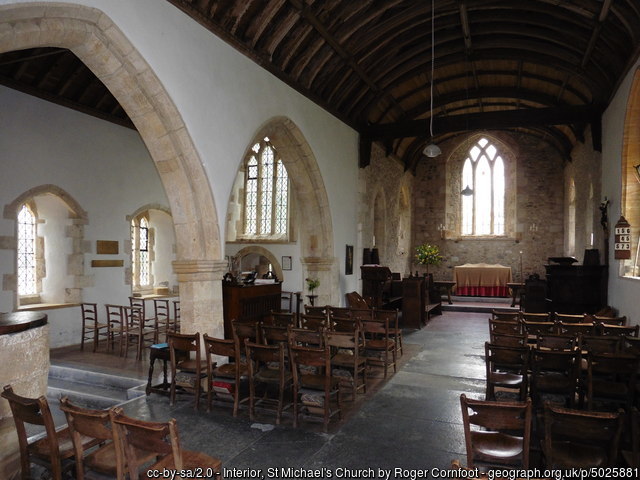
| Deleted: </iframe>Below is a ground level view of the moat, and inside and outside of the church. | Added: </iframe> Below is a ground level view of the moat, and inside and outside of the church. | ||
| Deleted: <div> | |||
| Deleted: <div> | |||
Unchanged: 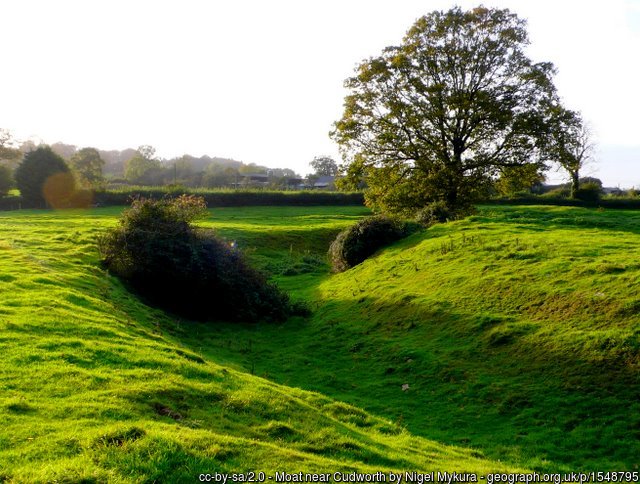

| Unchanged:
| ||
| Deleted: </div> | |||
| Deleted: </div> | |||
| Unchanged: As the site has not been excavated, so it is not known what lies under the mound of where the manor sat. However typically: | Unchanged: As the site has not been excavated, so it is not known what lies under the mound of where the manor sat. However typically: | ||
| Deleted: <blockquote>"In England in the 11th century the manor house was an informal group of related timber or stone buildings consisting of the hall, <a | Added: <blockquote>"In England in the 11th century the manor house was an informal group of related timber or stone buildings consisting of the hall, <a href="https:/ /www.britannica.com/topic/ chapel">chapel</a>, kitchen, and farm buildings contained within a defensive <a href="https:/ /www.britannica.com/technology/ wall">wall</a> and ditch." <a href="https:/ /www.britannica.com/technology/ manor-house"> Encyclopaedia Britannica</a> </blockquote> | ||
| Deleted: </blockquote> | |||
Note: Spaces may be added to comparison text to allow better line wrapping.
My Great Grandmother Gertrude Jessie Furneaux was born in 1876 in Burry Port Carmarthenshire.
That is great – do you know which branch of the Family she is from?
Will be visiting this site as well as other Furneaux sites in the UK, France and other Norman link sites in Norway later in the year. Am happy to share updated imagery and any interesting findings with you. We hope to uncover more direct Viking ancestry if possible and determine other possible connections across medieval French aristocracy. Many thanks to your wonderful work here Craig, you have certainly sparked a fire in my personal quest (and many others) for more answers. -Wyatt A. V. (Furneaux of America)
Dear Wyatt, So great to hear from you. I have very little information pre 1086 so would love to see what you find. The only reference I have found is here of an Odo https://en.wikipedia.org/wiki/Odo_I_of_Furneaux. If you follow this back, it would seem they were from Vermandois, and an earlier ancestor claimed he was a descendant of Charlemagne. All the best, Craig.
I have just chanced upon this site, my husband’s grandmother
Was a Furneaux, Evelyn, born at Widecombe on Dartmoor.
Hi Brenda, great to hear from you and you interest in family history. All the best, Craig